Why these “forgotten stories” matter
If you’ve ever stood in front of a famous U.S. landmark and wondered, “What am I missing that would make this place come alive?”—this guide is for you. Beyond postcards and field‑trip facts, many sites carry small design choices, corrected mistakes, name changes, and contested histories that add depth to what you’re seeing. Below you’ll find concise, well‑sourced trivia you can confidently share, plus practical cues so you can spot details on your next visit.
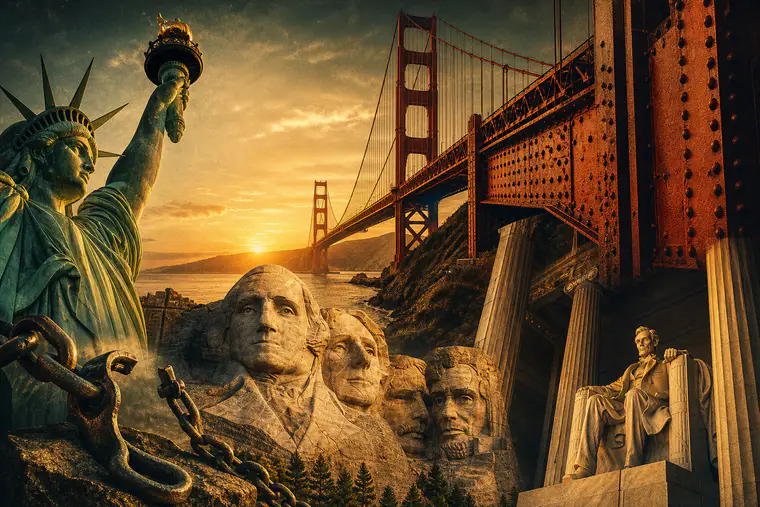
Statue of Liberty: The chains at her feet and a torch that isn’t original
What most visitors notice
The towering figure, the crown’s seven rays, and that unmistakable sea‑green hue.
What often goes untold
- Broken shackles and chains lie at Lady Liberty’s feet—easy to miss unless you look down. They symbolize liberation from oppression and were part of the original design intent.
- Her color isn’t paint; it’s a protective copper patina that formed naturally over decades. The green you see is the statue’s weathered “skin,” which actually helps prevent deeper corrosion.
- The torch you see today is a replacement installed during a major restoration in the 1980s; the original torch, altered over the years, now resides in the nearby museum. If you want to connect the dots, visit the museum first, then view the statue so the design changes are fresh in mind.
Lincoln Memorial: A quiet engraving fix and a public stage for change
What most visitors notice
The seated Abraham Lincoln, the reflecting pool view, and hushed grandeur of white marble.
What often goes untold
- Look closely at the north wall’s inscription of Lincoln’s Second Inaugural Address. In the word “FUTURE,” an engraver originally chiseled an “E” and later corrected it into an “F.” The subtle fix is still visible if you know where to look, a small, human mark in a monumental space.
- The memorial’s legacy isn’t only 19th‑century. It doubled as a national stage for civil rights in the 20th century, including an era‑defining 1963 speech on the steps. When you stand on the terrace, you’re occupying a site layered with multiple meanings: remembrance, protest, hope.
Golden Gate Bridge: International Orange, safety nets, and a Depression‑era gamble
What most visitors notice
That red‑orange sweep over the strait, fog rolling through the towers, and a skyline backdrop.
What often goes untold
- The color—International Orange—wasn’t a foregone conclusion. A primer’s visibility in fog helped convince the design team to make it the final hue. The shade improves maritime visibility and makes the bridge stand out against water, clouds, and coastal hills.
- During construction, a safety net slung under the roadway famously saved the lives of multiple workers who fell, an unprecedented precaution at the time. Survivors jokingly called themselves the “Halfway‑to‑Hell Club,” a grim but telling artifact of an era when large construction projects were far more dangerous than today.
- The bridge’s success was never guaranteed. It was built in the 1930s, when money and public support were tight, and demanded engineering leaps that later shaped modern suspension‑bridge practice.
Mount Rushmore: An unfinished idea and a hidden hall
What most visitors notice
Four presidential faces carved into Black Hills granite.
What often goes untold
- The sculpture we see is a fragment of a larger, evolving plan. Early concepts imagined fuller figures and explanatory inscriptions; a “Hall of Records” chamber was even started behind the carving to house information for future generations. That chamber exists and contains a repository of panels that explain the memorial’s purpose, even if visitors can’t enter it.
- The mountain’s story is inseparable from its setting. The Black Hills hold deep cultural and spiritual importance for Lakota Sioux and other Indigenous peoples, and 19th‑century conflicts over the land still shape how the monument is discussed. Knowing that layered context turns a quick photo stop into a more thoughtful visit.
The Alamo: A mission first, a fortress second—and a façade that changed
What most visitors notice
A weathered church front with the famous curved “hump,” shorthand for the 1836 battle.
What often goes untold
- Before the siege that made it legend, the site was Mission San Antonio de Valero, part of a chain of Spanish colonial missions. Its long mission era is easy to miss when the military story takes center stage.
- The iconic parapet on the church façade isn’t a battle‑era feature; it was added decades later. Period drawings and research show the building looked different during the 1836 fighting than it does today, a reminder that landmarks evolve after the events that made them famous.
Washington Monument: A two‑tone tower capped with a once‑precious metal
What most visitors notice
A simple white obelisk pointing skyward at the center of the National Mall.
What often goes untold
- The monument’s stone changes color partway up. Construction stopped for years and later resumed with stone from different quarries, leaving a visible “seam” that marks history in the very fabric of the tower.
- The tip is capped with aluminum—now ordinary, but once an expensive novelty. The cap doubled as a lightning rod and bears inscriptions, linking scientific practicality with ceremonial symbolism.
Hoover Dam: Art Deco elegance, a star map, and a persistent myth
What most visitors notice
A sweeping concrete curve holding back Lake Mead, flanked by monumental sculptures.
What often goes untold
- The dam is an Art Deco time capsule, from stylized eagles to terrazzo designs beneath your feet. Near the Nevada intake towers, you’ll find a celestial map set into the plaza that marks the sky as it appeared on the dedication date, intended to timestamp the project for distant future viewers.
- You may hear that workers are entombed in the dam. That’s a myth. Wet concrete would have forced any voids to the surface; construction practices didn’t allow for bodies to remain in place. Real history is compelling enough: grueling labor in harsh desert conditions and an audacious schedule that pushed engineering limits.
- Even the name tells a story. The project’s official title shifted over time before settling on the now‑familiar “Hoover Dam.”
The Liberty Bell: An abolitionist nickname and a crack that kept spreading
What most visitors notice
A large bronze bell with a dramatic fissure, paired with a line from Leviticus.
What often goes untold
- “Liberty Bell” wasn’t the original name. Abolitionists popularized the term in the 19th century, seizing on the inscription’s message to argue against slavery. The meaning people attach to the bell expanded far beyond its colonial origins.
- The bell’s crack isn’t a single event but a saga. Attempts to keep it ringing—public appearances, tours, and repairs—likely worsened the damage. Today, it stands as a symbol you listen to with your eyes, not your ears.
The Hollywood Sign: Born as an ad, reborn as an icon
What most visitors notice
A white, blocky name sprawled across the hills above Los Angeles.
What often goes untold
- The sign started life in 1923 as “HOLLYWOODLAND,” a real‑estate advertisement. The final four letters were removed mid‑century as the area shifted from sales pitch to symbol.
- By the 1970s, deterioration forced a complete rebuild with more durable materials and a citywide push to preserve what had become shorthand for the global film industry. It’s not ancient, but it is layered with reinventions that mirror Hollywood itself.
Alcatraz: From lighthouse to prison to protest site
What most visitors notice
The ruins of a federal penitentiary ringed by cold water and strong currents.
What often goes untold
- Before the era of high‑profile inmates, the island hosted a lighthouse and military post. Its strategic position long predated its prison fame.
- In 1969, Native American activists occupied the island to draw attention to treaty rights and the status of Indigenous communities. The action lasted many months and left a political imprint that still shapes how the site is interpreted.
- Look for remnants of gardens and small plantings cultivated by families of military and prison staff—soft details that complicate a hard place.
Plymouth Rock: A tradition named more than a century later
What most visitors notice
A boulder beneath a classical canopy, linked to a 1620 landing.
What often goes untold
- The first known claim that this stone marked the exact landing appeared more than a century after the event, and the rock itself has been moved and even broken along the way. It’s best understood as a symbol that later generations attached to the Pilgrim story rather than a proven footprint.
Empire State Building: A mast to nowhere and a mid‑century scare
What most visitors notice
A tapered skyscraper crowned by a spire, once the world’s tallest.
What often goes untold
- The top was designed as a mooring mast for airships—bold on paper but unworkable in practice. Turbulent winds and safety concerns ended the idea, but the vestigial mast remained and helped define the building’s silhouette.
- In 1945, a military aircraft accidentally struck the building in fog, a jarring moment that prompted safety reviews but did not compromise the tower’s long‑term integrity. The episode is a reminder that even icons have vulnerable chapters.
How to spot hidden details when you visit
- Read from the ground up. Plaques, cornerstone dates, and pavement inlays often hide the best clues.
- Look for seams, color shifts, and material changes—they can mark pauses, redesigns, or later additions.
- Ask rangers or docents about “what changed after the event” (e.g., façades, names, or interpretive choices). You’ll often get the most surprising answers.
- Visit site museums first. Seeing original parts (like a removed torch or prototype models) reframes what you’ll notice outside.
- Keep an eye on the surroundings. The landscape, neighborhoods, and sightlines are part of the story, not just the structure.
The big takeaway
America’s most visited landmarks aren’t static trophies. They’re living records: of design experiments, political struggles, cultural reinventions, and, sometimes, small human errors that slipped into stone. Learning these under‑told angles won’t just sharpen your trivia game; it will make the next visit feel like opening a well‑thumbed book to a chapter you somehow missed.
Frequently Asked Questions
Are these stories myths or verified history?
The examples above reflect widely documented details—like the corrected letter at the Lincoln Memorial, the color choice for the Golden Gate Bridge, and the “Hollywoodland” origin of the sign. Where a legend persists (for example, bodies in Hoover Dam concrete or the exact role of Plymouth Rock), we’ve presented it cautiously and noted uncertainties.
Can I really see the engraving error at the Lincoln Memorial?
Yes. It’s on the north wall with the Second Inaugural Address. Look closely at the word “FUTURE.” The corrected letter is subtle but visible in good light.
Why is the Statue of Liberty green?
The statue’s copper skin naturally oxidized, forming a stable green patina. That patina protects the underlying metal, so it’s both a color and a shield.
Which famous U.S. landmarks have changed names?
Several have. “Hollywoodland” shortened to the Hollywood Sign; “Executive Mansion” became the official “White House” name in 1901; and the big Colorado River project ultimately standardized as “Hoover Dam” after earlier usage varied.
Approved member comments will appear here.