Why these traditions are worth knowing
Looking for fresh trivia that actually sticks? The 15 cultural traditions below are real, regularly practiced, and often surprising to outsiders—not because they are “weird,” but because every community solves life’s big moments in its own creative way. If you’ve ever wondered, “Do people really do that?” the short answer is yes; and understanding the why behind each practice turns a fun fact into meaningful knowledge you’ll remember and share.
Two ground rules as you read:
- “Unbelievable” doesn’t mean unbelievable to locals. For the communities involved, these are familiar, valued customs.
- Traditions evolve. Dates, routes, and exact rituals may vary by region and year, so think of each entry as a window, not an exhaustive manual.
Use this list to upgrade your trivia game, spark thoughtful conversation, or start a respectful curiosity deep‑dive into world cultures.
1) Up Helly Aa (Shetland, Scotland)
Viking fire, island pride
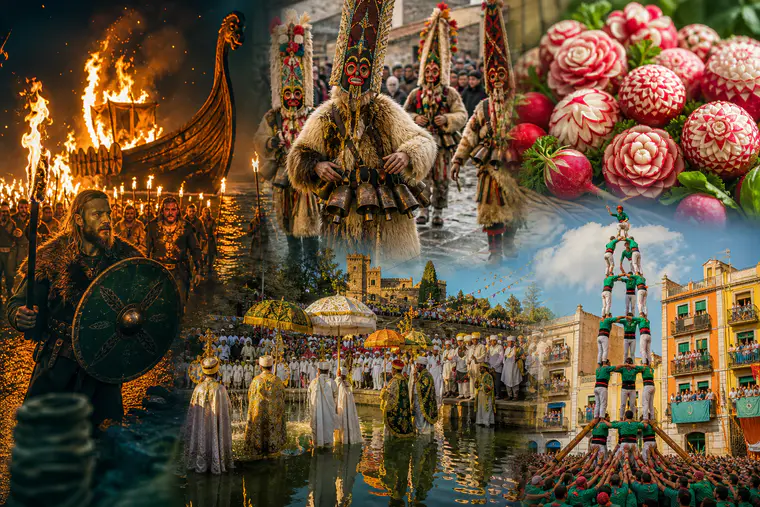
Each winter, towns in Scotland’s Shetland Islands hold torchlit processions that culminate in the dramatic burning of a wooden galley. The largest is in Lerwick. Locals dress in themed squads, elect a “Guizer Jarl,” and celebrate the islands’ Norse heritage with pageantry and community gatherings.
Why it matters: Beyond the striking visuals, Up Helly Aa reflects a living identity shaped by the North Atlantic—craftsmanship, teamwork, and a sense of place where winter nights are long and bright fires bring people together.
Trivia spark: The galley is painstakingly built for months, only to blaze for minutes—an intentional act of spectacle and renewal.
2) Noche de Rábanos (Oaxaca, Mexico)
Art carved from radishes
On the evening of December 23, central Oaxaca turns into an open‑air gallery of radish sculptures. Farmers and artists carve oversized radishes into nativity scenes, local legends, and playful tableaus. Prizes, music, and crowds follow.
Why it matters: This pre‑Christmas celebration elevates humble produce into public art, blending agriculture, faith, and wit. The temporary nature of the medium—radishes wilt fast—adds to its magic.
Try this: Search images of past winners to see how a root vegetable can become a cathedral, a village plaza, or a mythical creature.
3) Kanamara Matsuri (Kawasaki, Japan)
A spring festival of protection and prosperity
Held each spring, Kawasaki’s “Festival of the Steel Phallus” features processions with vividly decorated mikoshi (portable shrines). The symbolism connects to historical themes of protection, fertility, and community well‑being. Today, it also draws visitors for its playful, good‑humored atmosphere.
Why it matters: It’s a reminder that subjects often treated with embarrassment in some cultures can be approached with celebration and symbolism in others.
Respect note: Photography is common at public portions, but it’s still a religious festival—polite conduct goes a long way.
4) Thaipusam (Malaysia, Singapore, and Tamil communities)
Devotion in motion
During Thaipusam, Hindu devotees honor Lord Murugan with processions, vows, and offerings. Some carry kavadis—ornate frameworks borne on the shoulders—and, where practiced, undergo body piercings as acts of devotion and discipline.
Why it matters: Thaipusam foregrounds intention and endurance. For many participants, preparation includes prayer, fasting, and community support.
Trivia spark: The word “kavadi” refers to a burden or offering; designs can range from simple shoulder poles to towering, decorated structures.
5) Cooper’s Hill Cheese‑Rolling (Gloucestershire, England)
A wheel of cheese, a very steep hill
Competitors chase a rolling wheel of cheese down a steep slope near the village of Brockworth. Tumbles are common, and the first to the bottom wins.
Why it matters: This is folk sport boiled down to its essence—camaraderie, daring, and a dash of absurdity.
Friendly caution: Spectating from safe areas and following local guidance is part of the fun.
6) Monkey Buffet Festival (Lopburi, Thailand)
A feast for macaques
Each year, sections of Lopburi are piled high with fruit and treats for the city’s macaques. Locals and visitors watch as the animals swarm banquet tables, a lighthearted event that also nods to the town’s long coexistence with its monkey residents.
Why it matters: It’s a snapshot of human–animal relationships in an urban setting, framed through celebration rather than conflict.
Fun detail: Colorful pyramids of fruit make the photos unforgettable.
7) Krampusnacht (Alpine regions)
When folklore takes to the streets
In early December, people in parts of Austria, Germany, and neighboring Alpine areas dress as Krampus—a horned, costumed figure from regional folklore—parading through towns while St. Nicholas celebrates the virtuous.
Why it matters: It’s a living example of how communities stage morality tales, with humor and a pinch of fright, to mark the season.
Good to know: Costumes can be elaborate, featuring carved masks and bell‑laden belts.
8) Timkat (Ethiopia and Eritrea)
Epiphany, water, and communal joy
Timkat commemorates the baptism of Jesus, with processions of tabots (sacred replicas of the Ark of the Covenant), prayers, and joyful ceremonies around water. Participants often gather at pools or rivers where clergy bless the waters and the faithful.
Why it matters: Timkat highlights the deep historical roots of Christianity in the region and the way ritual water renews both spirit and community.
Soundbite to remember: Think “pilgrimage within the city”—streets themselves become sanctuaries.
9) Busójárás (Mohács, Hungary)
Masked mayhem to chase away winter
In late winter, the town of Mohács fills with “Busó” figures wearing wooden masks, woolly costumes, and clanging bells. Parades, dances, and bonfires symbolically drive out the cold season.
Why it matters: It’s a vivid example of pre‑spring rites—noise, fire, and masks—used worldwide to mark seasonal change.
Trivia spark: Traditional Busó masks are hand‑carved and often fierce, with exaggerated features.
10) Hadaka Matsuri (Japan)
Loincloths, luck, and a nighttime scramble
Across Japan, “naked festivals” center on male participants wearing fundoshi (loincloths). One of the best‑known is in Okayama, where thousands jostle to touch sacred objects for good fortune.
Why it matters: Public displays of endurance and purification are not about shock value; they’re expressions of communal courage and blessing.
Etiquette tip: Crowds can be dense; patience and respect for organizers are key.
11) Kukeri (Bulgaria)
Bells against bad luck
During the winter months, Bulgarian towns host Kukeri processions. Men wear heavy bells, animal‑inspired masks, and layered costumes, dancing to frighten away misfortune and usher in a fertile year.
Why it matters: It’s a living strand of Balkan ritual that turns streets into stages for collective hope.
Memory aid: Bells = banishing; masks = metamorphosis; dance = renewal.
12) Castells (Catalonia, Spain)
Human towers that scrape the sky
At Catalan festivals, teams called colles build multi‑story human towers. A small child, the enxaneta, often climbs to the summit to signal completion before carefully descending.
Why it matters: Castells are a masterclass in trust, training, and quiet bravery. Team members specialize—some form the stable base, others climb with practiced precision.
Trivia spark: Helmets for child climbers are now commonly used at events, reflecting how traditions adapt to prioritize safety.
13) Śmigus‑Dyngus (Poland)
Easter Monday becomes splash day
Easter Monday in Poland can involve playful water‑throwing in streets and town squares. The custom has roots in springtime cleansing and courtship rituals, now enjoyed as lighthearted fun.
Why it matters: It’s a perfect example of how solemn holidays also carry moments of communal joy.
Conversation starter: Ask friends whether their hometowns celebrate spring with water, powder, smoke, or sound—you’ll hear amazing parallels.
14) Inti Raymi (Cusco, Peru)
The sun returns, and the city becomes a stage
Around the Southern Hemisphere’s winter solstice in late June, Cusco stages an elaborate reenactment of Inca ceremonies honoring Inti, the sun. Dancers, musicians, and costumed performers process between historic sites, culminating in a dramatic main ceremony.
Why it matters: It connects modern Peru to its pre‑Columbian past, offering visitors a thoughtfully choreographed encounter with Andean heritage.
Tip for context: Many neighborhoods also host their own dances and events—festivity radiates outward from the main performance.
15) El Colacho (Castrillo de Murcia, Spain)
The “baby‑jumping” tradition
During Corpus Christi celebrations, costumed figures known as El Colacho leap over lines of infants placed on mattresses, symbolically sweeping away misfortune. The ritual is performed by designated participants as part of a larger religious festival.
Why it matters: It’s a striking instance of symbolic protection. The visual is dramatic, but it unfolds within a carefully organized community context.
Understanding cue: Think of it as a blessing through theater—choreographed, communal, and deeply local.
How to enjoy these traditions respectfully (even from afar)
- Learn the basics: Know what’s being celebrated, who leads it, and what symbols mean before you comment or share.
- Ask before photographing individuals: Public parades are one thing; private rituals are another. Politeness travels well.
- Follow local guidance: Organizers set routes, viewing zones, and participation rules for a reason.
- Keep comparisons generous: Avoid labeling practices as “strange.” Try “new to me,” “different,” or “fascinating.”
- Support local makers: Many festivals hinge on artisans—mask‑carvers, tailors, musicians, cooks. Seek out their work.
A pattern you’ll start to see
Look across these 15 entries and a pattern emerges: masks and music to usher in seasons; water, fire, and color to cleanse or renew; processions that turn streets into moving sanctuaries; feats of endurance that focus attention and invite blessing. The “unbelievable” element often comes from scale, costume, or a single unforgettable image (a flaming galley, a human tower, a shower of water), but underneath is the very believable human wish for community, luck, protection, and joy.
Quick conversation prompts for trivia lovers
Short cues that unlock big stories
- “Which festival burns a hand‑built ship to honor Norse heritage?”
- “Where do carved radishes become one‑night‑only sculptures?”
- “Name the Alpine custom that parades a horned folklore figure in early December.”
- “What Catalan tradition builds human towers at town festivals?”
- “Which Ethiopian celebration brings sacred replicas of the Ark into city streets?”
Use these as icebreakers, then follow up with the whys: seasonal change, devotion, protection, and communal pride.
What to remember if you plan to attend someday
- Dates can shift with lunar calendars or local decisions; verify with official local sources in the year you go.
- Some events draw large crowds. If you visit, arrive early, carry water, and mind your footing.
- Participation often requires preparation or affiliation. Spectating respectfully is a meaningful way to experience a tradition.
The takeaway
Great trivia isn’t just a grab bag of odd facts—it’s a bridge. Each tradition here carries history, artistry, and the shared work of neighbors turning belief into action. Learn one story well, and you’ll find it opens doors to many more.
Frequently Asked Questions
Are these festivals open to visitors?
Many are public celebrations with designated spectator areas, while certain rites are community‑led and not meant for general participation. Check current local guidance for the specific event and year.
How accurate are the dates for these traditions?
Most follow consistent seasons or religious calendars, but details can change. Always confirm dates, routes, and safety information with official local sources before making plans.
Do people really build human towers or burn full‑size ships?
Yes. Castells in Catalonia and the galley at Up Helly Aa are well‑established practices organized by trained teams and volunteers. Spectators typically have set viewing zones.
Is it appropriate to take photos or post on social media?
It depends. Public parades often welcome photography, but religious or private segments may not. When in doubt, ask a marshal or organizer, avoid obstructing participants, and prioritize respect over a shot.
Approved member comments will appear here.