The Feeling You Can’t Fake: Why Old Songs Hit Like Time Machines
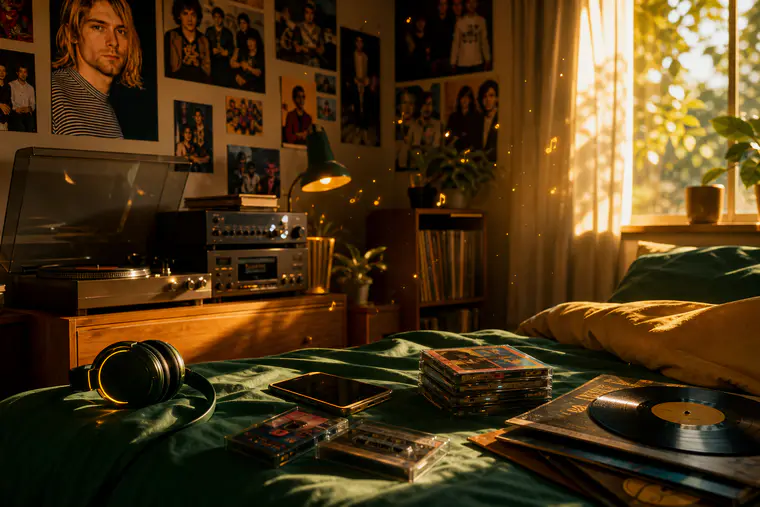
You press play and—boom—you’re back in a cafeteria, a car full of friends, or a bedroom plastered with posters. The song hasn’t changed, but you have. So why does music from your teenage years carry an emotional voltage that new tracks struggle to match? It’s not just nostalgia. It’s the way your brain, your identity, and your social world all converged during those years to engrave certain songs extra deep.
Below, we break down the science, the trivia, and the practical tactics to help you rekindle that magic—while actually discovering new music you’ll love just as fiercely.
The Teenage Brain Is Wired for Soundtrack Moments
Dopamine loves novelty
During adolescence, your brain’s reward system is hypersensitive to new and emotionally charged experiences. When you discover a song at 14 or 17, your brain floods you with dopamine—the same chemical that speeds learning. That surge doesn’t just feel good; it strengthens the memory of everything surrounding the moment: the lyrics, the bassline, the friend who shared it, the summer air.
Memory glue: amygdala + hippocampus
Emotional arousal amplifies memory encoding. The amygdala (emotion) “flags” experiences for the hippocampus (memory) to store more densely. Intense teen experiences—first crush, first concert, first heartbreak—turn songs into bookmarks for your life story. Years later, a few notes can unlock a vivid scene because the music is tied to an autobiographical network, not just a chorus.
Identity is under construction—and music is the scaffolding
In your teens, you’re building identity fast. Music helps signal who you are and who you want to be. Genre choices become shorthand for belonging: punk or pop, hip-hop or indie, choir or marching band. When a track feels tied to “me,” your brain prioritizes it. As adulthood settles, identity stabilizes, and fewer songs get that same foundational role.
The Reminiscence Bump: Why Ages 12–25 Dominate Memory
Psychologists call it the reminiscence bump: people recall a disproportionate number of intensely vivid memories from late childhood through young adulthood. That bump shows up across cultures and in studies of autobiographical recall. Music heard during those years piggybacks on the effect, gaining a built-in advantage.
- More firsts happen in that window (schools, relationships, jobs, travel).
- Emotions run hotter, and intense emotion cements memory.
- You have more free time to replay tracks, attend shows, and discuss music with friends, multiplying exposure.
Put simply: songs from that slice of life are better positioned to become memory anchors.
Exposure, Repetition, and the Big-Broadcast Era
Before streaming, radio, TV countdowns, and record-store listening stations created mass repetition. If you grew up in that system, you didn’t just like a song—you encountered it everywhere: in stores, carpools, dances, school gyms. That saturation drove the mere-exposure effect (we tend to like what we hear repeatedly), particularly when those listens were socially shared.
Today’s listening is hyper-personalized, which is amazing for discovery but can dilute the shared “anthem” effect. The result: songs might cycle through your algorithmic feed quickly without the slow-burn repetition that cements affection.
Trivia bite: the mere-exposure effect, named by psychologist Robert Zajonc, shows that familiarity can increase liking even when you don’t realize you’ve heard something before. Teen years often bring dozens of semi-passive exposures a week—precisely what cements a hook in memory.
Social Bonding: Music Makes Us Sync
Singing with a crowd, chanting at a game, dancing at a school event—these moments wire social feelings to specific sounds. Group musical activity can increase feelings of connection and trust. When a chorus becomes “our song,” your brain encodes it with the warm glow of belonging. That’s hard for solitary headphone listening to replicate unless you intentionally build new shared rituals.
Production Trends: New Songs Are Built for Speed
It’s not your imagination: modern pop often hits faster. In the streaming era, many chart songs place the vocal or hook within the first 5–10 seconds to survive the skip. Intros are shorter; choruses arrive earlier; arrangements aim to keep attention moving. Compared with the slower-build ballads or lengthy intros many of us grew up with, new structures can feel different—less patient, more compressed.
Other production shifts you might notice:
- Heavier dynamic compression and loudness for earbuds and phone speakers.
- Crisp, bright highs and prominent sub-bass designed for small devices.
- Genre hybridization (hip-hop/R&B/pop/electronic blends as the norm).
- More songs created with digital tools, pitch-correction as an aesthetic choice.
None of this makes modern music “worse,” but it can create a taste gap if your ear expects older structures. Given time and context, your brain builds new templates and the gap narrows.
Expectation, Schema, and “Good Old Days” Bias
As we age, we develop mental templates (schemas) for what a “great song” sounds like. New songs that don’t match these templates can feel off at first. Add a dash of rosy retrospection (we remember the highlights and forget the filler), and it’s easy to believe the past was a nonstop parade of classics. In reality, every era has its share of hits, misses, and growers.
The takeaway: if you want new music to land emotionally, you have to give it time and the right context—just like your teen favorites once had.
How to Make New Music Hit Harder
You can’t rewind your age, but you can recreate the magic conditions that forge deep music memories.
1) Pair firsts with fresh tracks
New city walk, new recipe, new workout route, first day at a new job—soundtrack those moments with a handpicked song. Emotion plus novelty supercharges memory.
2) Listen actively (not just as background)
- Put on good headphones or decent speakers.
- Read the lyrics once before or during the first listen.
- Close your eyes for the first chorus. No multitasking.
Depth of processing matters; attention is the difference between “heard it” and “felt it.”
3) Use strategic repetition
The mere-exposure effect needs…exposure. Try the 3-day rule: play the same track once a day for three days in different settings (morning walk, lunch break, evening wind-down). Many songs click on the 3rd–5th listen.
4) Create “Then & Now” playlists
Alternate a teen-era favorite with a modern song sharing a similar vibe (tempo, key, mood, instrumentation). The emotional warmth of the old track can transfer feelings to the new one through association.
Helpful tools for matching:
- Tunebat or Sort Your Music: sort by key, BPM, and energy.
- Last.fm or Obscurify: surface your patterns and less-played gems.
- Genius: lyric themes to pair songs by narrative.
5) Add a social layer
- Host a “3 songs I’m loving” swap with friends.
- Join a local open-mic, choir, or vinyl-listening night.
- Share a collaborative playlist and set a weekly theme.
Group rituals turn tracks into communal memories, just like your school dances once did.
6) Annotate your soundtrack
Keep a tiny music journal: date, song, where you were, who you were with, mood 1–10. A note in your phone or a Notion template works. Tag songs with memories (“first run after moving,” “rainy Sunday pancakes”). Later, those notes will turbocharge recall.
7) Use discovery systems on autopilot—but tweak them
- Spotify: Release Radar, Discover Weekly, and the Daylist are great if you seed them by saving and liking tracks you actually love.
- Apple Music: New Music Mix and Discovery Station get smarter when you heart or dislike songs.
- Last.fm scrobbling: helps you track patterns and revisit slow-burners.
- Radiooooo or Radio Garden: browse decades and countries to spark fresh-but-familiar textures.
8) Build rituals around listening
Light a specific candle, brew tea, or take a short night drive for “album hours.” Context cues become part of the memory trace, and smell especially is a powerful retrieval trigger.
9) Learn or remix a song
Play the chords on guitar or keys. Try a vocal harmony. Use a tool like Moises or Lalal.ai to separate stems and hear the anatomy. When you invest effort, you encode more deeply.
10) Go small, go local
Intimate venues and community shows deliver high-emotion, high-belonging experiences. That’s prime territory for your next forever song.
Fun Trivia and Quick Facts
- The reminiscence bump explains why ages 12–25 hold an outsized share of vivid memories, including music.
- The mere-exposure effect shows we often like things more simply by encountering them repeatedly—even unconsciously.
- Many modern hits put vocals within the first 5–10 seconds; decades ago, intros could stretch for much longer.
- Group singing and synchronized movement can boost feelings of connection—part of why anthems at games or concerts feel so powerful.
- Earworms tend to be mid-tempo with simple, repeating melodic patterns—perfect fuel for your brain’s prediction circuits.
- Pop culture often cycles nostalgia roughly every 20 years, which is why 2000s aesthetics and sounds surged again in the 2020s.
- The ritual of vinyl listening (full albums, side flips) can encourage attention, enhancing emotional uptake.
A 7-Day Challenge to Fall for New Music Again
- Day 1: Pick a theme (drive, focus, joy). Find five new tracks that fit. Save them to a fresh playlist named with the date.
- Day 2: Take a new route on a walk or commute and play the list start to finish—no skipping.
- Day 3: Choose your favorite track. Read the lyrics, look up a live version, and replay once with eyes closed.
- Day 4: Send that track to a friend with a one-sentence story. Ask for one back. Add both to a “Then & Now” mix with a teen-era favorite.
- Day 5: Attend a local show, livestream, or listening event. Add one discovery to your playlist.
- Day 6: Pair one track with a small first—new recipe, new café, new workout. Log a memory note.
- Day 7: Re-listen to the entire playlist in the evening. Star the top two and schedule a re-listen next week.
By the end, you’ll have exposure, emotion, social sharing, and context—all the ingredients that made the old songs stick.
The Bottom Line
Teenage songs feel powerful because your brain and life stage gave them VIP treatment: heightened dopamine, identity formation, intense firsts, social bonding, and heavy repetition. New music rarely gets the same runway by accident. But you can recreate the conditions on purpose. Give fresh tracks attention, context, and community, and some of them will grow into the future classics of your life.
Frequently Asked Questions
Is new music objectively worse than older music?
No. Tastes, production styles, and release strategies change. We also remember past hits more than past misses. With time and context, plenty of modern songs become lasting favorites.
Why do people stop discovering new music after 30?
Time pressure, stable identity, and established habits narrow exploration. Algorithms mirror those habits. Deliberate discovery rituals—weekly dig sessions, friend swaps—reverse the slide.
Can I ever love a new song as much as my teen favorites?
Yes, if you give it comparable ingredients: attention, repetition, emotion, and meaningful context. It may take weeks or months, but the bond can grow just as strong.
Do teenagers today get the same effect with their music?
Absolutely. Their songs are forming the emotional bookmarks they’ll revisit in 20 years. The mechanisms—dopamine, identity, social bonding—are human universals, even if the platforms change.
Approved member comments will appear here.