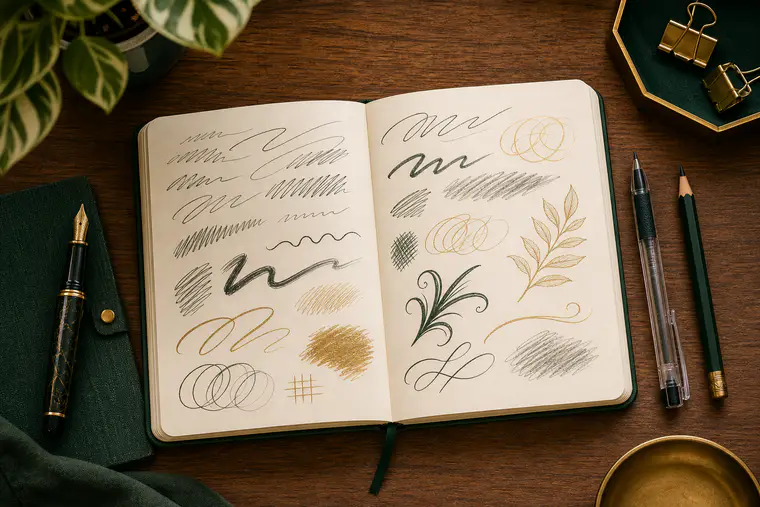
Curious why your signature looks bold and loopy while your grocery list is tiny and cramped? Handwriting is a window into habits, emotions, and even how your brain and body coordinate. While it can be tempting to treat handwriting as a crystal ball, the truth is more nuanced. Graphology (the practice of inferring personality from script) is debated in science. Still, your writing can reveal patterns about your energy, preferences, and mindset—especially when you compare samples over time.
This guide shows you how to read common handwriting cues, what they may suggest, how to take a fair sample, and how to use insights for self-reflection and better daily habits.
Start Here: How to Take a Fair Handwriting Sample
Set up a quick, neutral test
Before interpreting anything, collect a short sample under steady conditions:
- Use unlined white paper and a pen you like.
- Sit comfortably at a desk or table with good lighting.
- Write the same 4–6 sentence paragraph twice (copy the first paragraph again to control for novelty).
- Add your usual signature below.
- Date the page discreetly.
Now you have a mini “snapshot” of your natural writing style, mood, and motor patterns for today. For even better insights, repeat this once a week for a month and compare.
What to observe at a glance
- Size of letters (large, medium, small)
- Slant (right, left, vertical)
- Pressure (heavy indents vs. light strokes)
- Spacing (between letters, words, lines; margins)
- Baseline (words rising, falling, wavy, or straight)
- Letter shapes and details (loops, dots, crossings)
- Speed and rhythm (fluid, choppy, careful, rushed)
- Signature vs. body text (similar or dramatically different)
The Big Five Handwriting Signals
1) Size: big, small, or just right?
- Large writing can suggest extroversion, confidence, or an expressive nature. It can also indicate you were energized—or just writing for visibility.
- Medium size often reflects balance and practicality.
- Small writing might point to focus, introversion, or meticulousness—and sometimes fatigue or the need to conserve space.
Practical tip: If your script shrinks line by line, you may be tiring or concentrating intensely. Try taking brief breaks or enlarging your workspace.
2) Slant: right, left, or vertical
- Right slant often aligns with warmth, responsiveness, and outward engagement. It may increase when you write quickly.
- Vertical slant can reflect balance, objectivity, or deliberate control.
- Left slant sometimes signals caution, privacy, or a reflective stance.
Important caveat: Left-handed writers and certain scripts can naturally alter slant. Check multiple samples across days before drawing conclusions.
3) Pressure: feather-light to bold and deep
- Heavy pressure (indentations visible from the back of the page) may indicate intensity, determination, or strong emotions. It can also mean a firm grip.
- Medium pressure often suggests steadiness and reliable energy.
- Light pressure can reflect sensitivity, flexibility, or simply a quick, low-effort pace.
Try this: Place a blank sheet under your paper. If your writing leaves deep grooves, experiment with relaxing your grip and wrist to reduce hand fatigue.
4) Spacing: breathing room in your words
- Wide word spacing often accompanies independence and comfort with personal space.
- Tight spacing may suggest sociability, efficiency, or a tendency to compress tasks.
- Generous left margin and narrow right margin can reflect caution at the start and momentum once you get going. The reverse may suggest bold starts and dwindling fuel.
Look for consistency. Occasional crowding can result from writing fast or running out of room.
5) Baseline: the invisible line your words follow
- An upward baseline can signal optimism or rising energy.
- A downward baseline may suggest fatigue or a sober mood in that moment.
- A wavy baseline can point to fluctuating focus or a playful rhythm.
Use lined paper sometimes to check if your natural baseline steadies with guides. If it does, your waver might simply be a spacing habit.
Letter-Shape Clues Most People Miss
Loops in l, h, and e
- Tall loops (l, h) that are full and rounded can suggest imagination and enthusiasm; tight or pinched loops may indicate restraint or precision.
- An open “e” (a clear gap) can hint at openness to ideas; a fully closed “e” may reflect caution or decisiveness.
The t-bar: height, length, and direction
- High crossings can reflect ambition or high standards; low crossings may suggest practicality or a grounded approach.
- Long t-bars (extending far to the right) can signal drive; very short ones may suggest brevity or efficiency.
- Upward-tilting bars can feel optimistic; downward tilts can occur when rushing.
The i-dot: accuracy in miniature
- A precisely placed dot suggests attention to detail; a dot far ahead can signal fast thinking; far behind can indicate rushing.
- Circles or hearts above i’s often reflect playfulness—especially in informal notes.
Lower loops in g, j, y
- Full, rounded lower loops can suggest vitality and comfort with physicality.
- Narrow or retraced loops may point to reserve or a minimalist style.
Open vs. closed o
- Open o’s can indicate directness; closed o’s may reflect privacy or careful communication.
Capitals and embellishments
- Large, decorative capitals or underlines can suggest a desire to make an impression.
- Sparse, simple capitals may reflect efficiency and clarity.
Remember: These are tendencies, not verdicts. Culture, schooling, and the tools you use shape letterforms as much as personality.
Signature vs. Body Writing: Your Public vs. Private Face
Your signature often acts like a logo—how you want to show up.
- Much larger than body text: projecting presence, confidence, or a desire to be noticed.
- Similar in size and style: a straightforward, consistent self-presentation.
- Highly stylized or illegible: comfort with ambiguity, speed, or privacy about personal details.
- Underlines and flourishes: emphasis, pride, or a motivation boost.
Compare signatures across contexts—on forms, notes, greeting cards. If your signature changes drastically based on audience, it might reflect adaptive self-presentation.
Speed, Rhythm, and Flow
- Fast, connected writing often appears in big-picture thinkers or fast processors—and during deadlines. It can trade legibility for momentum.
- Slow, deliberate writing may reflect care, reflection, or just a new pen you’re getting used to.
- Choppy or stop–start rhythm can mean interruptions, uncertainty about spellings, or a perfectionist habit of retracing.
Note: Tremors, pain, or sudden changes in handwriting can have medical causes. If you notice persistent, unusual shifts unrelated to stress or tools, consult a medical professional.
Factors That Change Your Handwriting (That Aren’t “Personality”)
- Pen type and ink flow (gel vs. ballpoint vs. fountain)
- Paper texture and friction
- Posture, desk height, and chair support
- Fatigue, stress, hydration, and caffeine
- Writing speed and time pressure
- Temperature (cold hands write smaller and shakier)
- Script and language (different alphabets, habits, or schooling)
- Left- vs. right-handed writing positions
Control these variables if you want to compare personality-related tendencies across days.
A 10-Minute Self-Reflection Exercise
Set a timer for 10 minutes and try this mini audit:
- Write two paragraphs about a recent challenge and what you learned.
- Circle places where your baseline rises or dips noticeably. What were you writing there—optimistic takeaways or difficult parts?
- Underline three letters that repeat often (like t, e, g). Note how consistently you form them. What does that say about habits: meticulous, efficient, expressive?
- Compare signature to body text. If the signature is much bolder, is that the energy you want to carry into your day? If not, redesign it slightly and practice the new version 10 times.
- Finish by rewriting one sentence with deliberate spacing and comfortable pressure. Notice how that changes your sense of clarity.
This is not a test of truth; it’s a mirror for habits and mindset in the moment.
Practical Ways to Use Handwriting Insights
For self-awareness and mood
- Track a weekly sample and add a quick note: “tired,” “excited,” “calm.” Patterns help separate mood from stable traits.
- If pressure is consistently heavy, practice a lighter grip to reduce hand strain and cultivate a calmer pace.
At work or study
- If your writing is tiny and cramped during note-taking, zoom your notebook layout: larger margins, wider line spacing, and a smooth-ink pen to encourage legibility.
- If you rush and get messy under deadlines, try deliberate headings or boxed keywords to restore structure without losing speed.
In communication
- A more open, balanced script can make handwritten cards feel warmer. Space words slightly and lift the pen for clear letter boundaries.
- If your signature feels unlike you, redesign it: adjust size, add or remove flourishes, or straighten the baseline to match your authentic tone.
Common Myths vs. What We Know
- Myth: Handwriting precisely predicts job performance. Reality: Research finds limited predictive power for complex traits like conscientiousness or success. Hiring decisions should never rely on graphology.
- Myth: One sample reveals your core personality forever. Reality: Handwriting changes with context, tools, mood, and practice. Track patterns over time.
- Myth: Neat equals intelligent. Reality: Neatness often reflects training, time, and motivation, not cognitive ability.
- What we do know: Handwriting reflects motor control, attention, and habits. Forensic document examiners can compare authorship reliably under certain conditions, which is a different practice from personality reading.
Improve Your Handwriting (and Enjoy It More)
Quick daily warm-ups (2–3 minutes)
- Air-draw large ovals and figure-eights with your shoulder and elbow to loosen up.
- On scrap paper, make slow, even drill lines: upstrokes, downstrokes, and gentle curves.
- Write the alphabet in lowercase, focusing on consistent height and spacing.
Technique tweaks that pay off
- Grip: Hold the pen lightly between fingers; avoid clenching. A soft, wider pen body can help.
- Angle: Tilt the paper slightly rather than your wrist. Keep your forearm supported.
- Pressure: Aim for smooth, minimal pressure and let the ink do the work.
- Spacing: Use a light guide—two pen widths between words; one between letters where needed.
Practice prompts
- Copy a favorite quote at normal speed, then again 10% slower to feel the difference in control.
- Try a “style sprint”: for one page, exaggerate clarity—large letters, open loops, clean t-bars. Notice which tweaks you want to keep.
Helpful tools
- Smooth paper or a dotted notebook for subtle guides
- A comfortable gel pen or fine felt-tip; test a few
- Optional: a tablet with a matte screen protector and a fine stylus for digital practice
Real-World Examples (What It Might Mean—and What Else It Could Be)
- Big, right-slanted letters with sweeping t-bars: Expressive energy and enthusiasm—or you just wrote quickly with a slick pen.
- Small, upright, carefully spaced script: Focused, detail-minded—or you were copying data you wanted to avoid errors on.
- Heavy pressure and tight spacing in late-day notes: Drive under stress—or fatigue from a long day and a dry pen.
Always ask: What was I doing, how was I feeling, and what tools did I use?
The Takeaway
Handwriting won’t diagnose you or lock you into a label. But it can be a practical mirror for your energy, habits, and communication style. By taking fair samples, noting patterns, and making small adjustments, you can turn your everyday scribbles into a tool for insight—and even a little joy.
Frequently Asked Questions
Can handwriting really reveal personality?
To a degree, it reflects tendencies like energy, pace, and comfort with expression. However, scientific support for using handwriting to predict broad personality traits is limited. Treat insights as prompts for reflection, not as verdicts.
Why does my handwriting change day to day?
Mood, sleep, caffeine, pen choice, paper, posture, and time pressure all matter. Compare multiple samples over weeks to separate stable habits from temporary states.
Is cursive better than print for personality insights?
Neither is “better.” Cursive shows connectivity and rhythm; print can reveal precision and spacing habits. Many people blend both styles—an insight in itself.
Should I worry if my handwriting suddenly worsens?
Occasional changes are normal. But if you notice persistent, unusual shifts or hand discomfort unrelated to tools or stress, consider consulting a medical professional for guidance.
Approved member comments will appear here.