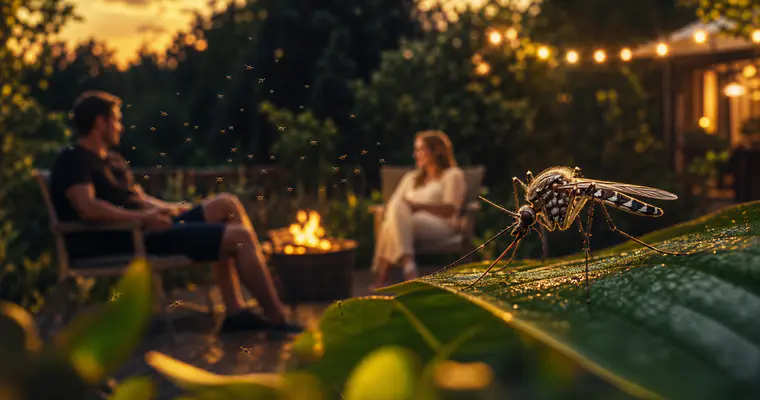
The Real Reason Some People Rarely Get Bitten
Everyone has that friend who can lounge outdoors at dusk without a single welt while you’re swatting nonstop. It isn’t your imagination: mosquitoes truly prefer some people over others. The good news? Their preferences follow biology you can understand—and hack.
In this guide, you’ll learn what actually attracts mosquitoes, why certain people seem nearly bite-proof, and what you can do today to make yourself far less appealing. We’ll also bust common myths and share practical, science-backed ways to protect your skin wherever you go.
How Mosquitoes Find You
Mosquitoes don’t home in on you randomly. Female mosquitoes (they’re the only ones that bite; males feed on nectar) use a layered search strategy:
- Carbon dioxide (CO₂): Your breath is a glowing beacon, detectable from dozens of feet away.
- Visual cues: Once “alerted” by CO₂, mosquitoes look for targets, favoring certain colors and contrasts.
- Heat and skin odors: As they close in, they lock onto body heat, humidity, and volatile compounds on your skin.
Different species are active at different times. Aedes aegypti—the species known for dengue, Zika, and yellow fever—hunts in daylight. Culex and Anopheles species often bite at dusk and night. That timing shapes when you’re most likely to be bitten.
Why Some People Seem Invisible to Mosquitoes
A handful of proven factors help explain why certain people rarely get bites.
1) Genetics and skin chemistry
Twin studies show your attractiveness to mosquitoes has a strong heritable component. In 2022, researchers at Rockefeller University found that people who produce more skin carboxylic acids (a byproduct of skin lipids and your microbiome) are mosquito magnets. Others naturally emit fewer or different ratios of these compounds—and get fewer bites. You can’t change your genes, but you can influence some downstream factors (keep reading).
2) Your skin microbiome
The bacteria living on your skin transform sweat into aromas mosquitoes can detect. People with a more diverse skin microbiome often get fewer bites, while dominance of certain bacteria (for example, some Staphylococcus species) correlates with more attractiveness. Everyday choices—from the soaps you use to how long sweat sits on your skin—can shift this chemical profile.
Interesting twist: A 2023 study found some scented soaps made volunteers more attractive to mosquitoes, while a coconut-like scent did the opposite—but results varied by person. Translation: fragrances are a gamble; unscented products are safer when bites are a concern.
3) CO₂ output and body size
Bigger bodies generally exhale more CO₂, and even small increases make you easier to find. Pregnancy also elevates CO₂ output and raises abdominal skin temperature slightly, which is why pregnant people often notice more bites. On the flip side, someone with lower metabolic output and cooler skin may simply “broadcast” less.
4) Heat, humidity, and sweat chemistry
Mosquitoes are drawn to warm, moist microclimates. Fresh sweat is mostly odorless, but as it dries and bacteria break it down, you release lactic acid, ammonia, and other attractants. People who run “hot,” recently exercised, or wear non-breathable fabrics will often seem tastier.
5) Color and contrast of clothing
After detecting CO₂, mosquitoes rely heavily on sight. Studies suggest they’re more likely to fly toward dark and long-wavelength colors like black, red, and orange, and less toward light, muted hues like white, beige, and light green. That friend in pale, loose clothing? They’re harder to spot—and may be cooler, too.
6) Blood type (small effect, if any)
You’ve likely heard type O blood attracts mosquitoes. Some older lab studies suggested a modest preference for O over A. But real-world effects appear small compared with CO₂, heat, and skin odors. Don’t count on blood type to explain big differences.
Why You Might Be a Mosquito Magnet
If you always seem to get more bites than your friends, a few common culprits are likely at play:
- You often wear darker or high-contrast clothing outdoors.
- You use floral/fruity fragrances in soap, lotion, or shampoo.
- You’re warm from exercise, or you don’t shower soon after sweating.
- You sit near still water, dense bushes, or wind-sheltered areas at prime biting times.
- You recently had a beer. Small field studies found beer drinkers got more mosquito landings than water drinkers, possibly due to changes in skin volatiles, temperature, or metabolism.
Make Yourself Less Bite‑Worthy: Practical, Science‑Backed Tips
You can’t rewrite your DNA, but you can stack the odds in your favor with a few habit changes and the right tools.
1) Choose proven repellents (and apply them correctly)
Look for EPA-registered active ingredients. When used as directed, these are safe and effective for most people:
- DEET: 20–30% for several hours of protection; safe for children over 2 months. Avoid high-concentration products unless you need very long protection.
- Picaridin: 20% works well, often with a lighter feel and less odor than DEET.
- IR3535: Common in European products; effective against mosquitoes and ticks.
- Oil of Lemon Eucalyptus (OLE)/PMD: Plant-derived but potent. Do not use on children under 3 years.
Application tips:
- Apply sunscreen first; let it absorb; then repellent on top.
- Cover all exposed skin; missed patches get bitten.
- Reapply as directed, especially after heavy sweating or swimming.
- For kids, adults should apply to their hands first, then to the child; avoid hands, eyes, and mouth.
Search online for the “EPA insect repellent search tool” to match products to your needs and time outdoors.
2) Dress to disappear
- Wear light-colored, loose-fitting clothing to lower your visual and heat signature.
- Choose tightly woven fabrics; mosquitoes can bite through thin knits.
- Treat clothing and gear with permethrin (or buy pre-treated items). It repels and can disable mosquitoes on contact. Do not apply permethrin to skin.
3) Manage heat, sweat, and scents
- Shower promptly after exercise and switch to dry clothing.
- Use fragrance-free soaps and lotions when bites are a risk. If you love scents, test them on a low-stakes evening first.
- Keep skin dry, especially around ankles, wrists, and behind knees—mosquito favorites.
4) Create an unfriendly backyard
- Drain standing water weekly: buckets, plant saucers, gutters, tarps, toys. Mosquitoes can breed in a bottle cap of water.
- Run a strong oscillating fan. A steady breeze both disperses your CO₂ plume and makes flying difficult.
- Use screens and repair gaps on windows and doors.
- Consider spatial repellents (e.g., devices using metofluthrin or allethrin) for patios. They can reduce landings in a defined zone.
- Avoid bug zappers—they mostly kill non-biting insects and hardly dent mosquito populations.
- If you use traps (CO₂ + attractant), place them far from seating to lure mosquitoes away, not toward you.
5) Time and place matter
Know your local biters. Avoid dense vegetation at dawn/dusk for night-active species. For day-biting Aedes, take extra precautions in late morning and late afternoon, especially in shaded, humid spots.
6) Travel smart
- In regions with malaria, dengue, or Zika, double up: repellent on skin + permethrin-treated clothing.
- Sleep under a properly tucked bed net (permethrin-treated nets are best) when lodging lacks screened windows or AC.
- Choose accommodations with fans or air conditioning—both reduce bites dramatically.
Myths vs. Facts
- Myth: Vitamin B1 (thiamine) supplements repel mosquitoes. Fact: Controlled studies do not support this.
- Myth: Eating garlic or bananas keeps mosquitoes away. Fact: No consistent evidence; your skin chemistry matters more.
- Myth: Ultrasonic devices repel mosquitoes. Fact: Multiple tests show they’re ineffective.
- Myth: Citronella candles guarantee bite-free evenings. Fact: They may modestly reduce landings within a small radius, but don’t rely on them alone.
Interesting Mosquito Facts You’ll Actually Use
- Only females bite, and they need blood protein to develop eggs. Nectar still fuels their daily energy.
- There are 3,500+ mosquito species. Only a handful specialize in humans.
- Mosquitoes can “learn.” Studies suggest they may avoid hosts who swat at them repeatedly.
- After detecting your breath, mosquitoes key in on long-wavelength colors (reds/oranges) because human skin reflects strongly in that range—even through many fabrics.
A Simple At-Home Experiment
Curious whether you’re truly a mosquito magnet? Try this low-tech test with a friend on a buggy evening:
- Both of you wear short sleeves. Stand 3–4 feet apart for 5 minutes without moving.
- Then switch positions and repeat.
- Count landings. If you repeatedly get more, congratulations—you’re the scent of the party. Adjust your clothing color, remove fragrances, and add repellent, then retest to see what changes help most.
When Bites Seem Worse Than Average
Some people develop large, hot, itchy swellings known as “skeeter syndrome”—a strong local allergic reaction to mosquito saliva. Cool compresses, oral antihistamines, and topical steroids (like 1% hydrocortisone) can help. Seek medical care if you experience signs of infection, hives beyond the bite site, trouble breathing, or fever after bites, especially when traveling in areas with mosquito-borne diseases.
Putting It All Together
People who “never get bitten” aren’t immune; they’re simply less interesting to mosquitoes based on CO₂ output, heat, skin chemistry, microbiome, and what they wear and do. With a few tweaks—light clothing, fragrance-free products, a fan on the patio, and an EPA-registered repellent—you can tip the odds dramatically. Start with the easiest wins, experiment, and enjoy your evenings outside with fewer welts.
Frequently Asked Questions
Do mosquitoes really prefer some people?
Yes. Genetics, skin chemistry, CO₂ output, heat, and even clothing color influence attractiveness. Some people naturally emit fewer attractant compounds and get fewer bites.
Do citronella candles and bracelets work?
Citronella candles may offer a small, close-range reduction in bites but are weak on their own. Wristband repellents protect only a tiny area. Use EPA-registered skin repellents for real coverage.
Will taking vitamin B1 or eating garlic repel mosquitoes?
No strong evidence supports vitamin B1, garlic, or similar folk remedies. Proven repellents like DEET, picaridin, IR3535, and OLE/PMD are far more reliable.
What color clothing should I wear to avoid bites?
Choose light, muted colors like white, beige, or light green. Avoid black, red, and orange, which mosquitoes are more likely to target once they detect your CO₂.
Approved member comments will appear here.