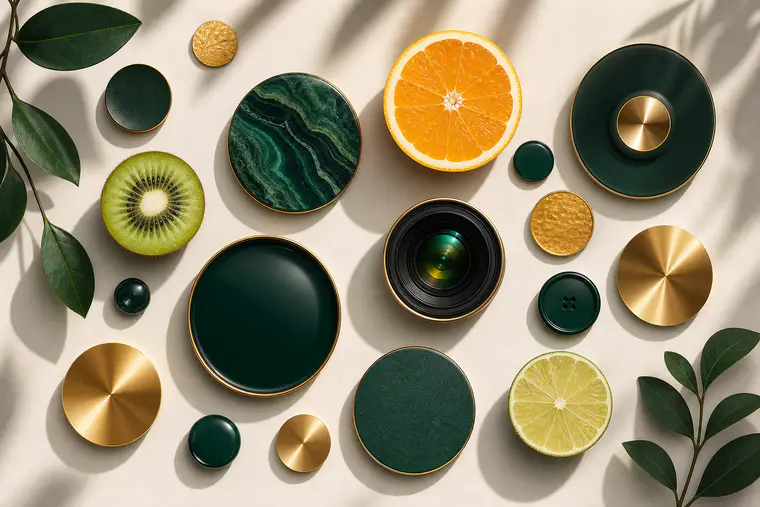
The Quiet Power of the Circle
Look around right now and you’ll spot them everywhere: the rim of your coffee mug, the camera lens on your phone, the icons on your screen, the clock on the wall. Circles feel natural, friendly, and complete. They guide attention without shouting. They suggest safety without being dull. But why do humans find circular shapes so compelling—and how can you harness that pull in design, learning, branding, and everyday problem‑solving?
This guide explains the psychology, evolution, culture, and practical applications behind our attraction to roundness. You’ll also get concrete tips and quick experiments you can run today to put circular shapes to good use.
Psychology: How the Brain Reads Curves
Our visual system is a pattern‑spotting machine. When shapes enter view, the brain rapidly asks: Is it safe? Is it useful? Does it belong to a group I already know? Circles often get favorable answers.
Curves feel safer than angles
Sharp angles can signal risk—think thorns, fangs, or the corner of a table you might bump into. By contrast, curves appear smoother and gentler. Many studies in cognitive and affective science suggest that people tend to prefer rounded forms over spiky ones when asked to choose “which looks nicer.” The effect is subtle but reliable: curved contours are associated with comfort and approach, whereas sharp contours can imply caution or avoidance.
Symmetry and closure reduce cognitive load
Circles are perfectly symmetrical. That symmetry makes them simple to recognize, even from unusual angles or partial views. The brain’s tendency to “fill in” missing information (often explained with Gestalt principles like closure and good continuation) means a circle remains stable and legible even when obscured. Lower mental effort translates into a small but meaningful preference for round forms—especially in cluttered, fast‑moving environments like a smartphone home screen.
Attention funnels toward the center
Curves gently guide the eye inward. A circular frame acts like a visual magnet that centers attention—useful for avatars, product shots, or call‑to‑action buttons. Because there are no corners tugging your gaze outward, your attention settles more quickly where the designer wants it.
Evolutionary Clues: Why Roundness Feels Familiar
Faces, eyes, and social connection
Human communication relies heavily on faces. The eye—the most socially charged feature we notice first—sits inside roughly circular boundaries: the iris and pupil. From infancy, we track rounded face‑like patterns, which may prime us to treat circles as socially relevant and worth noticing.
Food, shelter, and the sky
A surprising number of life‑relevant things are round or rounded: fruits, seeds, eggs, raindrops, wells, cooking pots, even the arc of a protective cave opening. The sun and moon—our oldest timekeepers—appear as circles. Over many generations, our nervous systems likely formed quick recognition pathways for rounded silhouettes tied to survival and comfort.
Energy efficiency in nature
Nature favors efficiency. Bubbles and droplets become spherical because a sphere (and its 2D cousin, the circle) encloses maximum volume or area with minimal surface. This “least‑effort” logic shows up in biology and physics, and humans tend to find such solutions visually pleasing. When a shape signals efficiency, we read it as “right.”
Cultural Meaning: Wholeness, Continuity, and Belonging
Across cultures, circles symbolize unity, eternity, and return. Wedding rings, halos, mandalas, medicine wheels, and round tables all carry ideas of completeness and equality. Even if people don’t consciously recall these meanings, cultural memory quietly layers positive associations on top of innate preferences.
Why Rounded Corners Took Over Interfaces
Pick up your phone: nearly everything has softened edges—hardware, app icons, notification bubbles, maps pins. Rounded corners came to dominate screens for practical and psychological reasons.
- Pixels render curved corners cleanly and reduce visual noise at small sizes.
- Rounded shapes are easier to scan and group, aiding interface clarity.
- Gentle curves suggest approachability, helping brands feel friendly.
- On physical devices, curves disperse impact and feel better in the hand.
The result is an interface language that “feels” faster and smoother, even when the underlying speed is unchanged. The edges signal that your fingers and eyes can move without catching.
Design and Branding: Where Circles Shine
Avatars and trust cues
Circle‑cropped avatars make faces pop while removing harsh edges, nudging us to pay attention to people. Communities often feel warmer when faces appear in circles rather than rectangles.
Logos and symbols
From car makers to sports teams to global nonprofits, circular marks read as inclusive and timeless. They scale down well, work in one color, and hold their form on busy backgrounds.
Packaging and product feel
Rounded bottles, lids, and labels suggest safety and comfort. On shelves, circular accents (stickers, seals, medals) attract the eye and signal specialness.
Data visualization (with caution)
Circles grab attention in infographics and dashboards. However, our brains compare lengths more easily than areas, so reserve pie charts for simple “part of a whole” stories. For precise comparisons, bars or lines work better. Use circles to highlight, not to measure.
Everyday Ergonomics: Comfort You Can Feel
Industrial and architectural designers often “fillet” sharp corners—adding small radii—because it reduces stress concentrations in materials and prevents chips and cracks. The same logic applies to comfort: round handrails, curved desk edges, and smooth door handles reduce pressure points and accidental scrapes. In movement spaces, circular flows—think roundabouts—can reduce hard stops and startle moments, though context matters.
Interesting Facts About Circles
- A circle encloses the largest area for a given perimeter in 2D; spheres do the analogous job in 3D.
- Bubbles and many cells adopt rounded forms to minimize surface energy.
- The human pupil is circular, allowing even diffusion of light across the retina.
- Wheels are circles because constant radius ensures smooth rolling and stable speed.
- In mechanics, rounded interior corners spread stress more evenly than sharp 90‑degree corners.
Practical Tips: How to Use Circles Intentionally
Use the following checklist when you want a design, document, or presentation to feel friendly, focused, and clear.
- Highlight people or objects: Circle‑crop avatars or key product shots to direct attention without adding extra borders.
- Soften the mood: Apply small corner radii to cards, buttons, and images. Start with an 8–12 px radius on web UI and adjust for your type scale.
- Guide with grouping: Use circular badges and dots to cluster related items (e.g., status indicators, step markers in a flow).
- Create focal points: Place critical numbers inside subtle circular overlays so eyes snap to your KPI.
- Convey inclusivity: For community, wellness, or education brands, consider a circular or ring‑based logo system that scales gracefully.
- Add movement: Animate circular progress indicators or “pulse” effects to signal activity without feeling aggressive.
- Keep accessibility in mind: Pair circles with strong color contrast and text alternatives. Don’t rely on shape alone to convey meaning.
- Avoid over‑rounding: Too many circles can feel juvenile or unfocused. Mix circles with rectangles for hierarchy and maturity.
Quick Experiments You Can Try Today
1) Button shape A/B test
- Version A: a rectangular call‑to‑action (CTA) with sharp corners.
- Version B: the same CTA with a moderate corner radius or pill shape.
- Keep color, size, and text identical. Track click‑through for a week. Many teams see small lifts with rounded CTAs due to increased approachability and focal clarity.
2) Avatar framing for community pages
Switch from square to circular avatars on a team or forum page. Ask a few readers to describe the page in one word before and after. Watch for words like “friendlier,” “cleaner,” or “warmer.”
3) Data highlight without a pie chart
If you’re tempted to use a pie chart for a single standout metric (e.g., 78% satisfaction), try this: keep your bar chart for accuracy, and add a large circular badge with the 78% number above it. You’ll get attention and precision together.
4) Packaging or presentation refresh
Add round seals—“New,” “Award‑winning,” “Just dropped”—or coin‑like icons to draw shelf or slide attention. Circles separate from backgrounds cleanly and carry status vibes.
When Not to Choose Circles
Even a beloved shape has limits. Consider alternatives in these cases:
- Precision matters: Avoid circular area comparisons for nuanced data; our eyes misread area differences.
- Space is tight: Circular images waste corner space inside rectangular layouts. Use rounded rectangles instead.
- Text must fit: Long labels wrap awkwardly inside circles. Use pill‑shaped containers or boxes with gentle radii.
- Tone should be serious or technical: Excessive roundness can feel playful. For sober contexts, mix straighter edges with subtle curves.
Circles in Learning and Memory
Educators and presenters can leverage round shapes to make concepts stick.
- Use circular concept maps to show cycles (water cycle, product lifecycle, review loops). The shape echoes the idea of return.
- Place key terms in circular “nodes” so learners scan from node to node without getting snagged on corners.
- For quizzes or flashcards, dot‑style progress (small filled circles) provides a calm sense of advancement.
The Big Picture: Why Circles Keep Winning
Circles blend three advantages: they feel safe, they are easy to process, and they carry deep cultural meaning. On screens and shelves, they guide attention; in products and spaces, they improve comfort; in symbols and stories, they promise unity and renewal. None of this means “always use circles,” but it does mean that roundness offers a reliable, human‑centered shortcut to clarity and warmth.
If you want your work to be welcoming without being weak, start with gentle curves. If you need emphasis without shouting, try a circular frame. Then test, observe, and keep what works. The circle’s power isn’t magic—it’s the long conversation between our bodies, our brains, and our world.
Frequently Asked Questions
Why do circles feel more friendly than sharp shapes?
Because curves lack threatening points and are easier for the brain to process. Rounded forms lower visual tension and guide attention smoothly, which we interpret as friendliness and safety.
Are circles universally preferred across cultures?
Preferences vary, but circles commonly symbolize unity and continuity in many cultures, from wedding rings to mandalas. That shared symbolism adds positive associations to an already approachable shape.
When should I avoid circular shapes in design?
Skip circles when precision is essential (complex data comparisons), space is limited, or the tone must be very formal. Rounded rectangles or straight‑edged layouts may communicate clarity and seriousness better.
Do rounded corners actually make interfaces feel faster?
They don’t change processor speed, but softer edges reduce visual friction. Your eyes and fingers glide more easily, which creates a perceived sense of smoothness and speed.
Approved member comments will appear here.