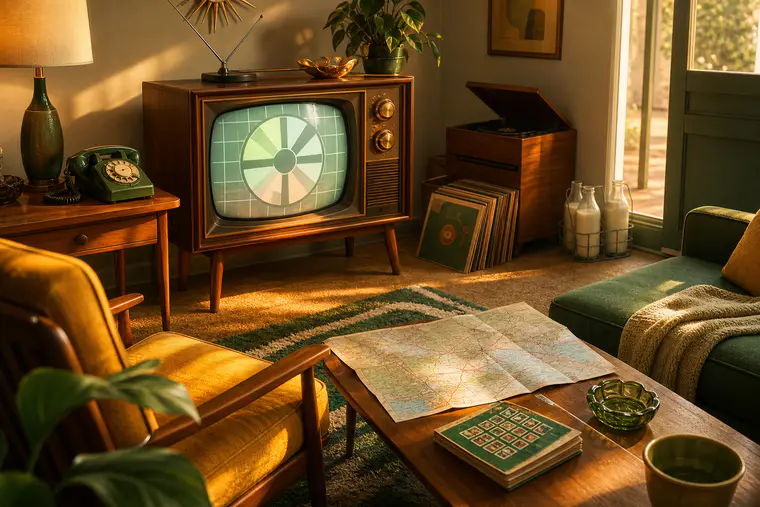
Baby Boomers—born roughly between 1946 and 1964—grew up in a world that moved at an analog pace. The tools, toys, and traditions that shaped their childhoods are a fascinating lens on how fast everyday life has changed. Whether you’re a Millennial curious about your parents’ stories, a Boomer ready for a nostalgia dive, or anyone who just loves cultural history, this tour of once-ordinary experiences reveals what they taught, why they mattered, and how to sample the best parts today.
The Big Three Networks and Appointment TV
Before streaming queues and infinite content, television was an event. Most households could access only three major networks plus a local station or two. Shows aired once weekly, at a specific time—and if you missed them, you waited for summer reruns.
Why it mattered
- Shared experiences: Entire classrooms discussed last night’s episode because almost everyone watched the same shows.
- Patience and planning: Families scheduled evenings around a favorite program, complete with commercials you couldn’t skip.
Try it today
Organize a “live watch” night with friends, no skipping or pausing. Use a vintage TV lineup as your guide and add period-appropriate snacks for fun.
Rabbit Ears, Test Patterns, and TV Sign-Offs
Before 24/7 broadcasts, stations ended the night with a national anthem and a test pattern. Reception depended on “rabbit ears” antennas that you’d adjust until the snow disappeared.
Interesting fact
The classic SMPTE color bars and the black-and-white Indian-head test pattern became cultural icons—and practical calibration tools for engineers.
Try it today
Watch a YouTube compilation of old sign-offs to experience the gentle ritual that once marked bedtime across America.
Rotary Phones, Party Lines, and Operator Assistance
Calling home meant sliding a finger into numbered holes on a heavy rotary dial. In some areas, “party lines” linked multiple households to the same number—so neighbors could accidentally overhear each other.
Why it mattered
- Conversation skills: With no texting, you’d call or show up in person.
- Privacy lessons: You learned phone etiquette quickly when others might be on the line.
Interesting fact
The “0” for operator wasn’t just symbolic—human operators connected long-distance calls and offered directory assistance.
Try it today
Buy a working rotary phone with a modern adapter. The tactile act of dialing slows you down in a delightful way.
Pay Phones and Phone Books
If you weren’t home, you found a pay phone, fed it change, and hoped you remembered the number. Every house had a thick printed phone book and a slimmer “Yellow Pages” directory for businesses.
Why it mattered
- Self-reliance: You memorized key numbers and navigated without GPS or a contact list.
- Local knowledge: Phone books doubled as community directories.
Interesting fact
In the late 1990s, there were over 2 million pay phones in the U.S. Today, they’re nearly extinct.
Film Cameras, Slides, and Photo Labs
Taking pictures meant finite film rolls (12, 24, or 36 shots). You composed carefully, then waited days for the prints—or invited family over for a slide-show night.
Why it mattered
- Intentionality: Each click had a cost, encouraging thoughtful framing.
- Social viewing: Slides turned photography into a shared storytelling ritual.
Try it today
Pick up a thrifted 35mm camera and shoot one roll over a weekend. The reveal at the lab is a small thrill modern photography can’t replicate.
Vinyl, 8-Tracks, and Cassettes
Music lived on physical formats. Records ruled the living room, 8-tracks came along for the car, and cassettes let you make the ultimate love letter: a mixtape.
Interesting fact
The term “album” comes from literal albums—bound collections of 78 RPM records—long before the 12-inch LP standardized the format.
Why it mattered
- Deep listening: You sat and heard a whole record, start to finish.
- Ownership: You could lend, trade, and treasure a collection.
Try it today
Listen to an album straight through—no shuffling—and read the liner notes. Or build a modern mixtape by sequencing a focused playlist with care.
Drive-In Theaters and Car Culture Nights
A giant outdoor screen, a tinny speaker that hooked to your window, and a car full of friends or family. Drive-ins were part movie, part picnic, and part hangout spot.
Why it mattered
- Community spaces: Drive-ins were multigenerational gatherings.
- Affordable fun: You could bring your own snacks and kids could wiggle without shushing a whole theater.
Try it today
Many drive-ins still operate. Pack blankets and a thermos, and arrive early for golden-hour nostalgia.
Milkmen, Glass Bottles, and Door-to-Door Services
Before mega-grocers, families got deliveries of milk in reusable glass bottles. Other door-to-door regulars: knife sharpeners, vacuum salespeople, and the friendly ice cream truck.
Interesting fact
Reusable milk bottles were an early circular economy: wash, refill, repeat—a sustainability practice that feels ahead of its time.
Try it today
Seek local dairies or farm co-ops that still deliver in glass. The taste—and reduced plastic—is a pleasant surprise.
S&H Green Stamps, Catalogs, and Mail-Order Magic
You earned trading stamps at supermarkets and gas stations, pasted them into books, and redeemed them for toasters or toys. The Sears catalog served as a wish list and shopping portal long before e-commerce.
Why it mattered
- Goal-setting: Kids learned delayed gratification by saving stamps.
- Imagination: Flipping a thick catalog nourished big dreams.
Try it today
Make a family “stamp book” for non-monetary rewards—cook together, volunteer, or complete a reading challenge to redeem points for a shared treat.
Card Catalogs and Encyclopedias
Research involved index cards and heavy encyclopedia sets. You navigated the Dewey Decimal System and the magic of cross-references.
Why it mattered
- Critical thinking: You learned to evaluate sources and synthesize information.
- Discovery: Serendipity happened on the shelves next to your target book.
Try it today
Visit a library and ask a librarian to show you a legacy card catalog (many still keep them). Try researching one topic using only print sources.
Shop Class, Home Ec, and Practical Know-How
Many schools taught woodshop, auto basics, sewing, and cooking. The result: confidence using tools and understanding how things are made or repaired.
Why it mattered
- Lifelong utility: Fixing a leaky faucet or hemming pants never goes out of style.
- Safety and respect: You learned to handle equipment responsibly.
Try it today
Take a weekend workshop in basic carpentry or sewing. Start with one practical project—like building a small shelf or mending a favorite jacket.
Metal Playgrounds and “Be Home by Dark” Rules
Playgrounds featured metal slides that could get toasty and tall jungle gyms over hard ground. Neighborhoods operated on trust: kids roamed in packs and came home when the streetlights flicked on.
Why it mattered
- Independence: Unstructured time outdoors built resilience and creativity.
- Community: You knew every family on the block by name.
Note
Standards have rightly improved around safety. You can recapture freedom without skipping helmets, sunscreen, or common sense.
Duck-and-Cover Drills and the Cold War Backdrop
Growing up under the shadow of the Cold War meant school drills and civil defense PSAs. It was a sobering reminder of global realities even for children.
Why it mattered
- Perspective: Boomers learned to balance everyday life with big-picture anxieties.
- Civic awareness: News consumption and public service were part of the culture.
Try it today
Explore oral histories from the era. Understanding past uncertainty can make modern challenges feel more navigable.
Saturday Morning Cartoons, Cereal Prizes, and Jingles
Cartoons were concentrated on Saturday mornings; toy ads and cereal jingles made the blocks feel like mini-holidays. Cereal boxes even included actual toys.
Why it mattered
- Anticipation: Kids counted down to a weekly treat.
- Branding memories: Music and mascots became cultural short-hand.
Try it today
Host a Saturday morning retro lineup. Pick shows from the era, pour a bowl of your favorite cereal, and see how different it feels from on-demand binging.
Road Trips with Paper Maps and TripTiks
Before GPS, families navigated with fold-out maps or customized AAA TripTiks—spiral-bound turn-by-turn booklets assembled by humans.
Why it mattered
- Spatial skills: Reading maps made geography more concrete.
- Teamwork: One person drove, another navigated.
Try it today
Do a short trip using only a printed map. You’ll notice your sense of direction sharpen—and conversations increase.
Carbon Paper, Typewriters, and Mimeographs
Duplicating meant carbon paper or purple-ink mimeograph machines (famous for their distinctive smell). Office work and school newsletters were tactile, noisy affairs.
Why it mattered
- Precision: Typos had consequences; you learned to proofread.
- Appreciation: The effort of producing documents made them feel weighty.
Try it today
Type a letter on a manual typewriter and mail it. The recipient will probably keep it—physical words carry presence.
How to Relive the Best Parts—Without the Worst Hassles
Nostalgia is most rewarding when it inspires connection, creativity, or calm. Here are simple, practical ways to tap into Boomer-era charm today:
- Declare an Analog Hour: Put phones away after dinner. Play a record, read aloud, or call a friend on speaker.
- Make a Family Time Capsule: Include a handwritten note, developed photos, a local map, and a newspaper clipping. Open it in five years.
- Try a Repair First: Before replacing a gadget, watch a 10-minute tutorial and attempt a fix. Even a small success builds confidence.
- Plan an Appointment TV Night: Pick one show, one time. No pausing, no second screens; text reactions afterward.
- Take a Film Day: Shoot one roll of 35mm and create a tiny print album. Label each photo on the back.
- Navigate “Offline”: For a weekend hike or drive, use a printed map. Pair it with a compass app if you’re new to it.
- Host a Record Swap: Invite friends to bring one vinyl, one cassette, or even a curated playlist and tell the story behind it.
- Write a Real Letter: Keep a box of stationery and stamps at home. Mail a thank-you, a story from your week, or a book recommendation.
The Upsides Millennials Brought
It’s also fair to acknowledge what Millennials and younger generations popularized that improves on the past:
- Access to knowledge: Instant research lowers barriers to learning.
- Creative platforms: Affordable tools for music, film, and art distribution.
- Safer play spaces: Better designs and materials reduce injuries.
- Environmental awareness: Refill culture and vintage shopping echo the milkman model, with climate benefits.
The point isn’t to crown a “best” era. It’s to borrow the timeless bits—patience, presence, practical skills—while celebrating today’s conveniences and protections.
Frequently Asked Questions
What years define the Baby Boomer generation?
Most historians use 1946–1964 for Baby Boomers, reflecting the post–World War II birth surge in the United States and similar trends in other countries.
Did every Boomer experience all these things?
No. Experiences varied by region, income, and family preferences. Rural areas had party lines longer; some cities kept milk delivery later; not every school offered shop class.
Are any of these traditions still around?
Yes. Drive-ins operate in many towns, vinyl is thriving, film photography has resurged, and some dairies deliver in glass. Libraries also maintain print research collections.
What’s a simple way to try Boomer-era living for a day?
Plan a Saturday with no streaming or smartphones. Use a paper map for an outing, cook a recipe from a vintage cookbook, play a full album, and write one letter to mail on Monday.
Approved member comments will appear here.