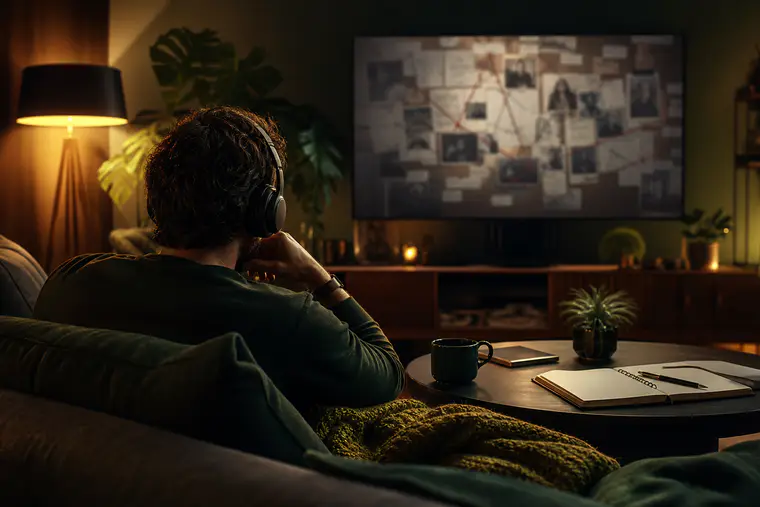
Why true crime grabs our brains
Open any podcast app or streaming service and you will find wall‑to‑wall true crime. People listen during commutes, fold laundry to case updates, and swap theories over dinner. Some feel more vigilant afterward; others say it relaxes them, oddly. What is going on psychologically, and what does our interest reveal about personality? This guide unpacks the science, the social dynamics, and the individual differences—and offers practical ways to enjoy the genre without letting it hijack your mood.
What counts as true crime today
True crime is no longer just a paperback on a cold case. It is an ecosystem that includes:
- Documentary series and limited dramas based on real investigations
- Narrative podcasts with episodic or anthology formats
- Longform journalism and books that reconstruct events from records and interviews
- Live shows and discussion communities that analyze developments
The common thread is a promise: you will learn how something terrible happened in real life, why it unfolded as it did, and what consequences followed. That promise plugs directly into core human drives—prediction, explanation, and control.
The safety brain: practicing danger from the couch
A leading explanation for true‑crime fascination is threat rehearsal. Our brains are built to learn from rare but high‑impact dangers. Consuming stories about real crimes lets us simulate risk from a safe vantage point. You can think of it as mental flight simulation: the story supplies the scenario, and your brain quietly rehearses detection, avoidance, and response.
Three parts of this safety circuit matter most:
- Prediction: piecing together motives, timelines, and clues satisfies the brain’s craving to forecast what happens next.
- Control: understanding patterns—what victims did or did not do—creates a sense (sometimes a false one) that outcomes are steerable.
- Preparedness: even if you never face such danger, you store procedural knowledge: when to lock doors, how to disengage from a risky situation, when to call for help.
That sense of preparedness can be calming for some listeners. For others, especially those high in trait anxiety, nonstop exposure to worst‑case scenarios can amplify worry. The same mechanism that teaches safety can also overfit to fear if there is no balance.
Justice, outrage, and moral emotions
True crime also activates moral emotions: anger at injustice, sympathy for victims, and relief when accountability arrives. Stories that end with truth uncovered create moral closure; stories that expose systemic failures feed a desire to reform the system. Either way, the emotion is meaningful. We are storytelling primates who use narratives to define right and wrong, and we bond over shared judgments.
This moral dimension explains why audiences often prefer survivor‑centered, responsibly reported stories to sensational takes. When a piece humanizes victims and explains context—investigative errors, socioeconomic pressures, community responses—it satisfies the deeper moral curiosity beneath the surface shock.
Personality traits that predict interest
No single personality profile owns true crime, but several traits tilt the odds of who becomes a devoted fan. Think of these as dials, not boxes.
Sensation seeking
People high in sensation seeking enjoy intense, novel experiences. True crime delivers safe intensity: rapid heartbeats and cliffhangers without leaving the couch. Fans who describe the genre as exciting or addictive often score higher on this trait.
Need for cognition
If you love difficult puzzles, long explanations, and complex plots, you likely have a high need for cognition. Deep‑dive podcasts and multi‑episode documentaries reward analytical listeners who enjoy assembling timelines and testing hypotheses.
Empathy and justice sensitivity
Many fans are drawn by compassion for victims and outrage at injustice. They appreciate content that centers survivors, examines root causes, and spotlights prevention. For these listeners, the story’s purpose is not thrill but understanding and solidarity.
Neuroticism (anxiety proneness)
Higher neuroticism can pull in two directions. Some individuals find that learning warning signs reduces their anxiety. Others find that repeated exposure heightens vigilance and sleep disruption. If you jump when a floorboard creaks after a binge, your nervous system is telling you to adjust the dial.
Dark traits? Not necessarily
Enjoying true crime does not equal enjoying harm. While a small minority may be attracted for voyeuristic reasons, most fans report motives like learning, empathy, and justice. If you are curious about where you fall, try the self‑reflection check later in this article.
Social glue and identity play
Humans sync to each other through shared attention. True crime provides a common topic with built‑in suspense and weekly reveals, perfect for watch parties, forums, and office chatter. Communities form around preferred formats (courtroom coverage vs. investigative reporting), standards of ethics, and inside jokes. That identity play—being the person who spots inconsistencies, or who always advocates for victim rights—becomes part of how we present ourselves socially.
Parasocial bonds matter, too. Hosts who speak in a warm, confiding tone become companions. Their ability to metabolize fear with humor or compassion helps listeners do the same.
Why women often report higher interest
Surveys frequently find that women make up a large share of true‑crime podcast and documentary audiences. Several hypotheses can coexist:
- Threat‑rehearsal value: Women are disproportionately targeted in some violent crimes, which may heighten interest in prevention cues and situational awareness.
- Empathy emphasis: Content that foregrounds victims’ experiences resonates with many women who prioritize relational understanding.
- Community and safety talk: Sharing safety strategies and comparing notes—ride‑share habits, dating red flags—turns media into mutual support.
These are trends, not rules. Plenty of men prefer true crime for learning and empathy, and plenty of women dislike the genre. What matters is how it affects you personally.
The storytelling craft that keeps us hooked
Great true crime applies three narrative levers:
- Narrative transport: a vivid sense of place and character pulls you into the world, temporarily lowering skepticism as you absorb details.
- Curiosity gaps: episodes end with unanswered questions that your brain wants to close, releasing dopamine at each reveal.
- Uncertainty resolution: alternating theories keep your prediction engine running until a credible explanation emerges.
Add strong pacing, careful sound design, and credible sourcing, and you have a recipe that rewards attention the way good mysteries do—only with higher stakes because it really happened.
Benefits: how the interest can help
When consumed thoughtfully, true crime can:
- Improve situational awareness and boundary‑setting skills
- Increase civic literacy about policing, courts, forensic limits, and wrongful convictions
- Build empathy by humanizing victims and communities
- Spark community service, policy interest, or donations to victim‑support groups
- Provide a meaningful social outlet through respectful discussion
Risks: how the interest can backfire
Overuse or sensational content can lead to:
- Heightened anxiety, hypervigilance, or sleep problems
- Numbness or compassion fatigue from repeated exposure
- Misconceptions about crime rates or forensic certainty
- Voyeurism or casual sharing of graphic details that retraumatize survivors
Watch for signs such as doom‑scrolling late at night, catastrophizing ordinary noises, or feeling irritable after listening. Those are cues to step back.
Practical tips for mindful true‑crime consumption
A few small habits protect your well‑being while preserving what you enjoy.
Set a viewing window. Avoid crime content within two hours of bedtime. Pair the last episode with a calming buffer—a light comedy or a short walk.
Curate ethically. Favor shows that center survivors, avoid gratuitous detail, cite sources, and consult experts. Many creators publish content warnings; heed them.
Diversify your feed. Balance true crime with genres that restore your mood: science explainers, nature, humor, or fiction.
Move your body. Listen while taking a daylight walk or doing chores so the tension has a physical outlet.
Convert insight into action. If a story highlights a safety habit—verifying addresses, sharing ride details—integrate it into your routine rather than just worrying.
Set social norms. In group chats, skip graphic specifics and focus discussion on prevention, accountability, and systemic lessons.
Journal the takeaway. One sentence per episode: what did I learn, feel, and choose to do? This transforms passive anxiety into active agency.
Take breaks. If a case sticks in your head or spikes your heart rate, pause the series. Curiosity will keep; your nervous system comes first.
A quick self‑reflection check
Use these prompts to map your personal motives and boundaries. There are no right answers—only patterns you can work with.
- What do I look forward to most: the puzzle, the emotion, the community, or the sense of safety?
- After an episode, do I feel calmer, more alert, or more on edge? How long does that feeling last?
- Which storytelling choices push me over the line (audio of distress, graphic reconstructions, sensational framing)?
- When I share a story, do I center victims and solutions—or shocking details?
- What is my red‑flag sign to take a week off (poor sleep, irritability, intrusive thoughts)?
- What positive action can I take this month inspired by something I learned (donation, training, community event)?
Ethics: consuming real pain with respect
True crime involves real human suffering. Ethical consumption means:
- Respecting privacy: avoid doxxing, rumor‑spreading, or hounding families
- Avoiding glamorization: do not celebrate perpetrators or turn them into icons
- Supporting responsible creators: look for transparent sourcing and trauma‑informed approaches
- Elevating solutions: pay attention to prevention programs, victim services, and policy reforms highlighted by reporting
If a story tempts you to play detective in real life, remember that online sleuthing can harm investigations and people. Stick to verifiable facts from credible sources and resist speculation.
Turn fascination into growth
Your curiosity can feed personal and civic growth.
- Learn local resources. Save hotline numbers for victim support and community services. Know how to request a welfare check appropriately.
- Upgrade everyday safety with dignity. Practice assertive boundary scripts, share itineraries for unfamiliar trips, and keep emergency contacts current.
- Build civic literacy. Read about how evidence standards work, what forensic tools can and cannot prove, and how appeals unfold. Understanding limits reduces overconfidence in simple answers.
- Volunteer or support organizations. Court‑watch groups, community mediation, and victim advocacy centers welcome help and donations.
- Teach media literacy to friends and family. Discuss confirmation bias, responsible speculation, and how algorithms reward outrage. Shared norms keep communities healthier.
Case‑study snapshots: motives in action
- The analyst: Drawn to meticulous timelines and court filings, this fan loves mapping events and spotting contradictions. Strength: critical thinking. Watch‑out: getting lost in theory wars.
- The empath: Connects deeply with victims’ stories and celebrates survivor resilience. Strength: compassion and advocacy. Watch‑out: compassion fatigue—needs recovery breaks.
- The pragmatist: Focuses on prevention takeaways and everyday safety. Strength: applied learning. Watch‑out: sliding into hypervigilance if feed skews too dark.
- The social connector: Loves watch parties and forum discussions. Strength: community building. Watch‑out: uncritically amplifying rumors; should model verification.
You may recognize parts of yourself in more than one. Use that knowledge to curate your queue and your boundaries.
Bottom line
People love true crime because it trains prediction and control, engages moral emotions, and connects us to others through shared puzzles and values. Personality tilts the experience—sensation seekers chase intensity, empaths chase understanding, analysts chase answers—but anyone can turn curiosity into growth. Consume responsibly, protect your sleep and mood, and convert fear into informed action. When you do, the genre becomes less about darkness and more about clarity.
Frequently Asked Questions
Does liking true crime mean there is something wrong with me?
No. Most fans are motivated by learning, empathy, and a desire for justice. Pay attention to how it affects your mood and make adjustments if anxiety spikes.
Why do cliffhangers feel so irresistible in true crime?
They create curiosity gaps—unanswered questions your brain wants to close. Each reveal delivers a small dopamine reward, which keeps attention engaged.
How much true crime is too much?
If it disrupts sleep, heightens everyday fear, or crowds out other interests, it is too much for now. Take a break, rebalance your media diet, and return mindfully.
What are signs a show handles the topic ethically?
Clear sourcing, content warnings, survivor‑centered storytelling, and avoidance of gratuitous detail. Hosts who discuss limits of evidence are another green flag.
Approved member comments will appear here.